
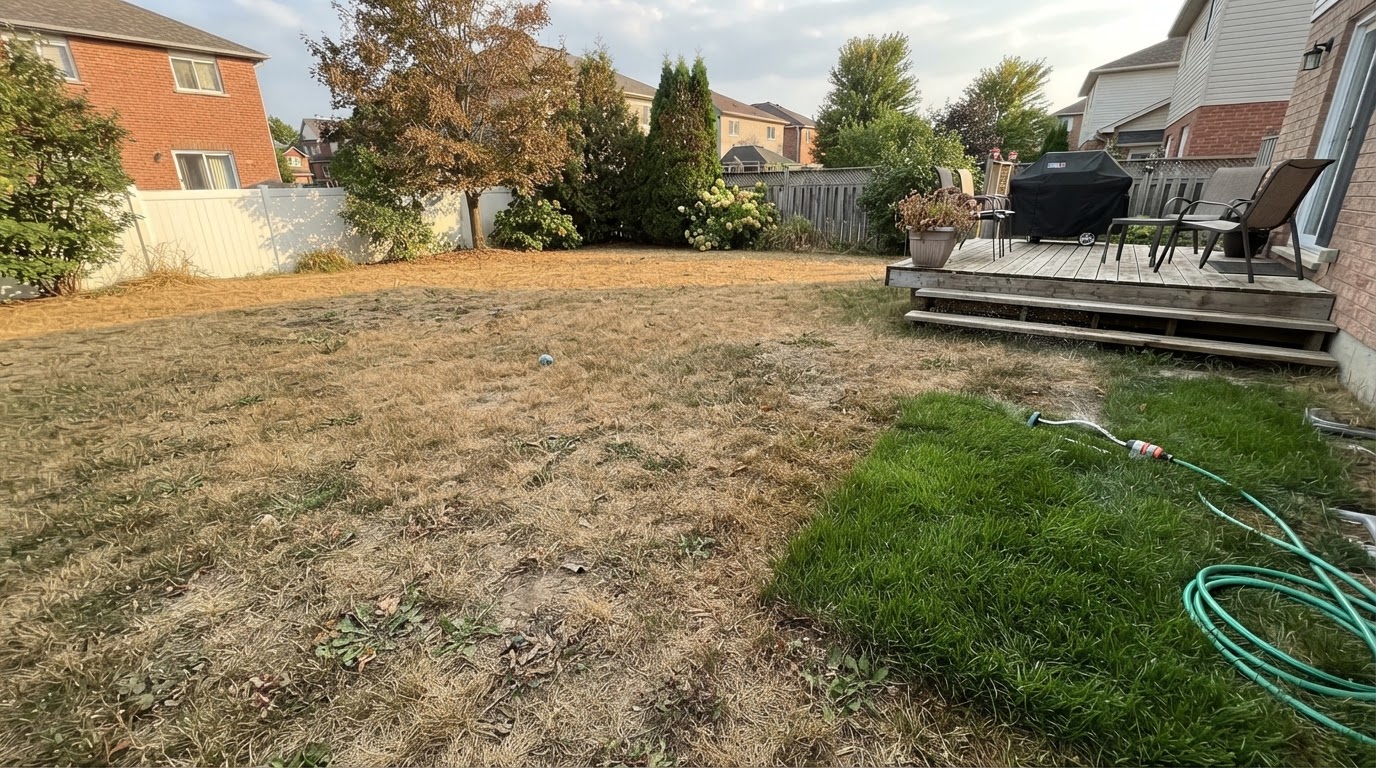
Is Your Lawn Dead or Just Dormant?
Every summer, lawns across Richmond Hill, Aurora, Markham, and the rest of York Region turn brown. It looks alarming, but here's the truth: most brown lawns in late summer aren't dead — they're dormant. Cool-season grasses (Kentucky bluegrass, perennial ryegrass, fine fescue) have a built-in survival mechanism. When temperatures stay above 28°C and rainfall drops, they shut down, stop growing, and turn brown to conserve energy. The crown — the growth point — stays alive underground, waiting for moisture. A dormant lawn can survive 4–6 weeks without water and still fully recover. A dead lawn cannot. The difference matters because the fix is completely different. This guide walks you through diagnosing your lawn and reviving it the right way, and ties directly into our 9-step fertilization program for long-term drought resilience.
The Dormancy vs Death Diagnostic Test
Before you spend a dollar on renovation, run this simple test. It costs nothing and tells you everything.
- The tug test:Grab a handful of brown grass and pull. If it resists and stays rooted, the crown is alive — it's dormant. If it pulls out cleanly with no resistance, the roots are dead.
- The water test:Soak a 3×3 ft section deeply (30 min of irrigation). Wait 7 days. If it greens up, your whole lawn is likely dormant. If nothing changes, that section is dead.
- Check the crown:Part the brown blades at soil level. A living crown is whitish/green and firm. A dead crown is brown, mushy, or dried out. Even one live crown per square foot means the lawn can recover.
- Timeline check:Browned within the last 4–6 weeks during a hot dry spell? Likely dormant. Brown and crumbling since early spring? Likely dead.
If It's Dormant: The Revival Plan
Dormant grass just needs water and time. The goal is to rehydrate the crown without shocking it. Apply 1 inch of water per week (split into 2 deep sessions of 30 min each), applied in the early morning to minimize evaporation and fungal risk. Within 7–14 days of consistent moisture, you'll see new green growth. Don't fertilize a dormant lawn — the grass isn't actively growing, so the fertilizer either washes away or burns the crown. Don't mow a dormant lawn short either; leave it at 4 inches to shade the soil and reduce further stress. Once it greens up, resume your normal program with our lawn maintenance services.
If It's Dead: The Full Renovation Plan
If your lawn is truly dead — no live crowns, roots pull out, the water test shows nothing — you need renovation. Here's the sequence and what each step costs in York Region.
Lawn renovation cost breakdown — York Region 2026
| Step | What It Does | Cost / Sq Ft | When |
|---|---|---|---|
| 1. Soil test | Identifies pH, nutrient, and organic-matter issues | $30–$60 flat | Before anything else |
| 2. Core aeration | Relieves compaction, opens seedbed | $0.25 – $0.35 | Early fall (Sept) |
| 3. Dethatching | Removes dead thatch layer blocking seed | $0.20 – $0.30 | Same visit as aeration |
| 4. Overseeding | Applies drought-tolerant seed blend | $0.15 – $0.25 | Right after aeration |
| 5. Starter fertilizer | Phosphorus-rich feed for new roots | Included in program | At seeding |
| 6. Top dressing | Adds 1/4 inch compost/soil blend | $0.40 – $0.60 | After overseeding (optional) |
| 7. Watering program | Daily light watering for 3 weeks | DIY or included | First 3 weeks |
Why Fall Is the Best Time to Renovate in Ontario
If you're reading this in late summer or early fall, you're in luck — it's the single best time to renovate a lawn in Ontario. The same conditions that make fall ideal for our aeration and overseeding calendar make it ideal for full renovation: warm soil (12–18°C) for fast germination, cooling air that reduces heat stress on new seedlings, and the natural fall root-growth phase that gives new grass 4–6 weeks to establish before winter dormancy. New grass seeded in September is far stronger going into winter than grass seeded in spring. If you're past early October in York Region, hold off on seeding and apply our winterizer fertilizer instead, then renovate in early September the following year. For the full drought-recovery reading list, see our why-is-my-lawn-turning-brown guide.
Choosing the Right Seed for Drought Recovery
Not all grass seed is equal for drought recovery. In York Region, use a drought-tolerant blend of:
- Tall fescue (40–50%):Deepest roots of any cool-season grass (up to 3 ft), excellent drought tolerance, stays green longest in dry spells.
- Kentucky bluegrass (30–40%):Spreads by rhizomes to self-repair bare spots; goes dormant but rarely dies in drought; the Ontario standard.
- Perennial ryegrass (10–20%):Fast germination (5–7 days) for quick cover; moderates the blend's drought response; good wear tolerance.
- Fine fescue (0–10%):Shade and low-fertility tolerance; good for blended sun/shade yards. Avoid too much — it's shallow-rooted.
Preventing the Next Drought Brownout
Once your lawn is revived, build drought resilience so the next hot summer doesn't repeat the cycle. Three priorities:
- Deep, infrequent watering:1 inch once weekly (not 15 min daily). Trains roots deep so they reach moisture in dry periods. See our watering guide.
- Annual core aeration:Relieves the clay compaction that limits root depth in York Region. Book it every September with our aeration services.
- Raise mowing height to 3.5–4 inches:Taller grass shades the soil, cools the crown, and grows deeper roots. Our grass cutting service keeps this consistent all season.
Frequently Asked Questions
The drought-recovery questions we hear most from York Region homeowners.
- How long can a lawn stay dormant before it dies?4–6 weeks without water. After 6 weeks of dormancy, crowns start to die. If you can't water weekly, a light 0.25 inch every 10 days keeps crowns alive.
- Will fertilizer fix a brown lawn?No — it can make it worse. Fertilizing dormant grass burns the crown. Wait until the lawn greens up and is actively growing, then apply the right blend.
- How much does professional lawn renovation cost?A full renovation (aeration + dethatch + overseed + starter fertilizer) for a 1,000 sq ft York Region lawn runs $350–$600. Our 9-step program bundles it into a season-long plan.
- Should I just lay sod instead of overseeding?If more than 50% of the lawn is dead, sod is faster and often cheaper than renovation. For 20–40% damage, overseeding after aeration works well and costs less.