Prevent Lawn Disease with Fall Leaf Removal
Lawn Care, Fall Leaf Removal, Richmond Hill Ontario
Why Fall Leaf Removal Prevents Grass Rot and Lawn Disease
A colourful Ontario fall is beautiful, but for your lawn it can be a hidden threat. When leaves are left to mat down on the turf, they do far more than create a messy appearance. In Richmond Hill and across York Region, heavy leaf cover contributes directly to grass rot, snow mold, and a range of fungal and bacterial lawn diseases that can devastate your yard by spring. Understanding why fall leaf removal Ontario matters is the first step in protecting the investment you have made in your lawn.
1. Light Deprivation and Crown Suffocation
Many homeowners assume that once the nights turn cool and the first frosts appear, their grass has stopped growing and gone fully dormant. In reality, cool-season turfgrasses common in Richmond Hill, such as Kentucky bluegrass and perennial ryegrass, continue to photosynthesize whenever soil temperatures are above roughly 5 °C. That means throughout much of October and November, your lawn is still actively using sunlight to store energy in its crowns and roots for winter survival and strong spring regrowth.
When fallen leaves form a solid, unbroken layer, they block almost all light from reaching the grass blades. Just two to three weeks of complete light blockage is enough to significantly weaken the crowns (the growing points at the base of each plant). Prolonged deprivation causes the crowns to thin, then die, leaving bare or patchy areas once the snow melts. This is one of the primary reasons why remove leaves lawn Ontario is such an important seasonal task, particularly in neighbourhoods with large silver maples, ash, or mature oaks that drop heavy foliage in a short period of time.
In addition to blocking light, a dense mat of leaves traps humidity at the soil surface and physically presses against the crowns. This combination of darkness, still air, and pressure creates ideal conditions for rot, even if you have otherwise healthy turf. Once crowns are suffocated, no amount of spring fertilizing will bring those plants back; they must be replaced through overseeding or sodding, which is far more costly than routine fall cleanup.
2. Snow Mold Incubation Under Matted Leaves
Snow mold is one of the most common lawn diseases seen in Richmond Hill, Aurora, and surrounding York Region communities each spring. Two main culprits are Typhula (grey snow mold) and Microdochium nivale (pink snow mold). While these fungi are naturally present in many lawns, they become a serious problem when conditions allow them to incubate unchecked over winter. A thick, wet leaf layer is exactly the environment they prefer.
The matted leaves provide the perfect trifecta: constant moisture, abundant organic matter, and cool temperatures. When early snowfalls arrive before the ground has fully frozen, the snow acts as insulation, keeping the leaf layer damp and slightly above freezing. Under this blanket, snow mold fungi can spread aggressively for weeks or months without disturbance. By the time the snow recedes in March or April, the damage is already done, and you see circular grey or pink matted patches where the turf has been killed or severely weakened.
Homeowners often ask whether snow mold is simply a matter of weather. While temperature and snow cover are factors, unmanaged leaves dramatically increase the risk and severity. Proactive fall leaf removal Ontario disrupts this incubation layer, allowing the turf surface to dry and breathe before consistent snow cover arrives. This single step can significantly reduce the likelihood of snow mold outbreaks, especially in shaded or low-lying parts of the yard where snow lingers longer.
3. Fungal and Bacterial Disease Development in Wet Conditions
Snow mold is not the only concern. A thick, damp leaf layer also encourages other fungal and bacterial diseases such as Pythium blight and Fusarium patch. These pathogens thrive in wet, poorly aerated conditions, particularly when daytime temperatures fluctuate and nights remain cool and moist, as they often do in October and November in Richmond Hill and Aurora. Leaves left on the lawn hold moisture against the blades and soil surface, creating a microclimate that these diseases exploit.
Once established, Pythium and Fusarium can spread quickly through affected areas, leaving greasy, water-soaked patches or bleached, straw-coloured spots. Because they attack both the foliage and the crown tissue, recovery is slow and often incomplete without reseeding. Preventing these diseases is far easier than curing them. Consistent leaf removal improves air circulation at the turf surface, allowing dew and rainfall to dry more quickly and making the environment less hospitable to pathogens. When you consider the cost of fungicide treatments and renovation work, regular leaf removal Richmond Hill lawn disease prevention is a practical and cost-effective strategy.
4. Physical Grass Damage from Wet, Heavy Leaves
Beyond disease risk, wet leaves cause direct physical damage to the turf. After repeated rain or early wet snow, leaves become waterlogged and heavy. This weight compresses the grass blades and crowns, flattening them against the soil. In areas where leaves remain undisturbed for weeks, the grass may never fully recover its upright growth habit, even if it survives. The result is a thin, weak stand that is more vulnerable to weeds, drought stress, and further disease pressure the following season.
Compacted leaf mats are especially damaging on slopes, along driveways, and near walkways where wind tends to pile debris. These are also high-visibility areas of your property, so damage is both functional and aesthetic. Regularly clearing leaves prevents this prolonged compression, allowing the turf canopy to remain open and resilient heading into winter. For homeowners who take pride in a lush, even lawn, this is a key reason why remove leaves lawn Ontario should be treated as essential maintenance rather than a cosmetic chore.
5. Soil Compaction and Anaerobic Zones Beneath Leaf Mats
Healthy soil is full of air spaces that allow water to infiltrate, roots to grow, and beneficial microbes to thrive. When leaves are left to decompose in a thick, soggy layer, they can create anaerobic zones at the soil surface. The constant moisture and pressure reduce pore space, squeezing out oxygen and favouring anaerobic bacteria over the diverse, oxygen-loving organisms that support strong turf growth. Over time, this leads to surface compaction, poor drainage, and weakened root systems.
In Richmond Hill’s clay and clay-loam soils, which are already prone to compaction, this effect is magnified. By spring, affected areas may remain soggy long after the rest of the yard has dried, inviting further disease and making mowing difficult. Routine fall leaf removal, combined with periodic core aeration, helps maintain a well-structured soil profile where grass roots can penetrate deeply and access nutrients efficiently. Protecting soil biology in this way is one of the less visible but most important benefits of proper fall cleanup.
6. Frequency Matters: A Schedule for Richmond Hill Yards
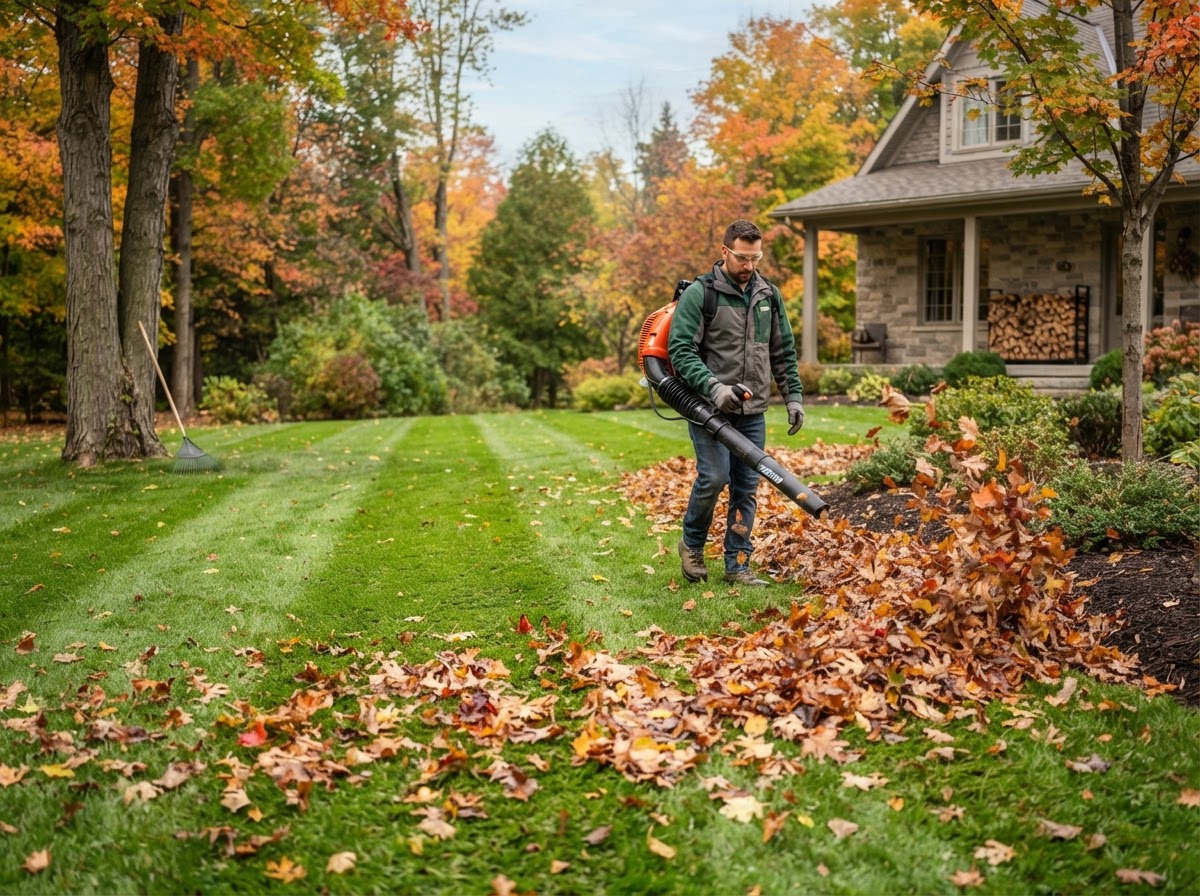
Many homeowners plan a single big cleanup in late November, but by then much of the damage described above can already be underway. For effective fall leaf removal Ontario, frequency is crucial. As a general guideline, aim to remove leaves every 7–10 days throughout the main drop period. In Richmond Hill and Aurora, the first significant flush of silver maple and ash leaves typically occurs in early October, with additional waves through mid and late October as other species shed.
A practical schedule might include an initial cleanup in early October, follow-up visits or DIY sessions every week to ten days, and a final check in late November once most leaves are down and before consistent snow cover arrives. This approach keeps the turf surface clear enough to receive light and air while preventing heavy, wet mats from forming. If your property has many mature trees or if you travel frequently in the fall, partnering with a professional service like Lush Lawncare & Landscaping can ensure this schedule is maintained without disruption. You can explore our fall and seasonal services at https://lushlawncares.ca/services/maintenance/yard-cleanup and https://lushlawncares.ca/services/maintenance.
7. Mulch-Mowing: Only for a Light Leaf Cover
Mulch-mowing can be an excellent practice when done correctly. Finely shredded leaves add organic matter and trace nutrients to the soil, supporting microbial life and improving structure over time. However, mulch-mowing is appropriate only when the leaf layer is light enough that you can still clearly see grass between the pieces after mowing. If you are pushing the mower through a thick blanket of leaves, you are more likely to create the type of mat that causes the problems outlined earlier.
For most Richmond Hill properties, this means mulch-mowing early in the season when leaf fall is moderate, then switching to bagging or blowing as the volume increases. A sharp blade and slower mowing speed help ensure leaves are chopped finely enough to filter down between the blades rather than clumping on top. If in doubt, follow this simple rule: after mowing, you should still see green turf; if the surface looks mostly brown or covered, remove and collect the excess leaves instead of leaving them in place.
8. Responsible Leaf Disposal Options
Once leaves are off the lawn, they become a valuable resource rather than a problem. Homeowners in Richmond Hill and York Region have several disposal and reuse options. The simplest is to use municipal yard waste pickup, placing leaves in approved paper bags or bins for collection. This keeps your property tidy and ensures the material is handled through local composting programs rather than ending up in landfill.
For those interested in enhancing their gardens, shredded leaves make an excellent mulch for flower beds, shrub borders, and vegetable plots. Applied in a thin, even layer, they help conserve moisture, suppress weeds, and gradually break down into rich organic matter. Another option is to add chopped leaves to a backyard compost bin, balancing them with green materials such as grass clippings or kitchen scraps. Lush Lawncare & Landscaping can advise on the best approach for your property during a fall cleanup visit, ensuring your leaves are handled efficiently and sustainably.
Professional Fall Cleanup: An Efficient, Preventive Solution
Raking and removing leaves is labour-intensive, especially on larger or tree-dense properties. For many Richmond Hill and Aurora homeowners, busy schedules and unpredictable fall weather make it difficult to maintain the ideal 7–10 day cleanup cycle. Partnering with a professional lawn care company ensures that leaf removal is handled promptly and thoroughly, reducing your risk of grass rot, snow mold, and other lawn diseases while freeing your time for other priorities.
Lush Lawncare & Landscaping serves Richmond Hill, Aurora, and the broader York Region with tailored fall cleanup programs designed around local tree species, typical weather patterns, and your property’s unique needs. Our crews use commercial-grade blowers, mowers, and collection equipment to clear turf areas efficiently, manage disposal responsibly, and leave your lawn prepared for winter. To learn more about services in your area, visit https://lushlawncares.ca/richmond-hill and https://lushlawncares.ca/locations/aurora, or request a quote through our contact page at https://lushlawncares.ca/contact-us.
If you would like to deepen your understanding of seasonal lawn care, our blog offers practical guidance on year-round maintenance and winter preparation. Explore more articles in our Maintenance category at https://lushlawncares.ca/blogs/category/maintenance and discover cold-weather strategies in our Winter Tips section at https://lushlawncares.ca/blogs/category/winter-tips. With a proactive approach to fall leaves today, you can enjoy a thicker, healthier, and more resilient lawn when spring returns to Richmond Hill and the rest of York Region.
