
What you do for your lawn in the fall determines how it looks for the next eight months. Ontario lawns go dormant for a long, cold winter, and the grass that enters that winter weak, hungry, or smothered comes out thin, patchy, and weed-prone the following spring. The grass that goes in strong, well-fed, and clean emerges dense and vibrant. That's why fall is, without question, the most important season for lawn care in Richmond Hill, Aurora, Markham, Vaughan, and across York Region — more impactful even than spring. This checklist walks through every fall lawn care task in the right order, explains why each matters for winter survival and spring green-up, and shows how they fit together into one cohesive plan. Whether you do it yourself or rely on our fall cleanup and fertilization services, following this checklist gives your lawn its best possible start to the next growing season.
Why Fall Is the Most Important Lawn Care Season
It surprises many homeowners to learn that fall matters more than spring for lawn health. Here's why: cool-season grasses like Kentucky bluegrass and perennial ryegrass do most of their root growth and energy storage in the cooler, wetter conditions of early to mid-fall. The grass is still photosynthesizing and storing carbohydrates in its roots, building the reserves it will live on through winter and use to green up in spring. A lawn that receives proper fall feeding, aeration, and cleanup stores enough energy to emerge strong; a neglected lawn depletes its reserves and starts the next season behind. Fall is also when weeds are most vulnerable to treatment, because they're pulling nutrients down into their roots — the perfect time for effective, low-dose control. Getting fall right sets up a full year of healthier turf.
1. Remove the Leaves
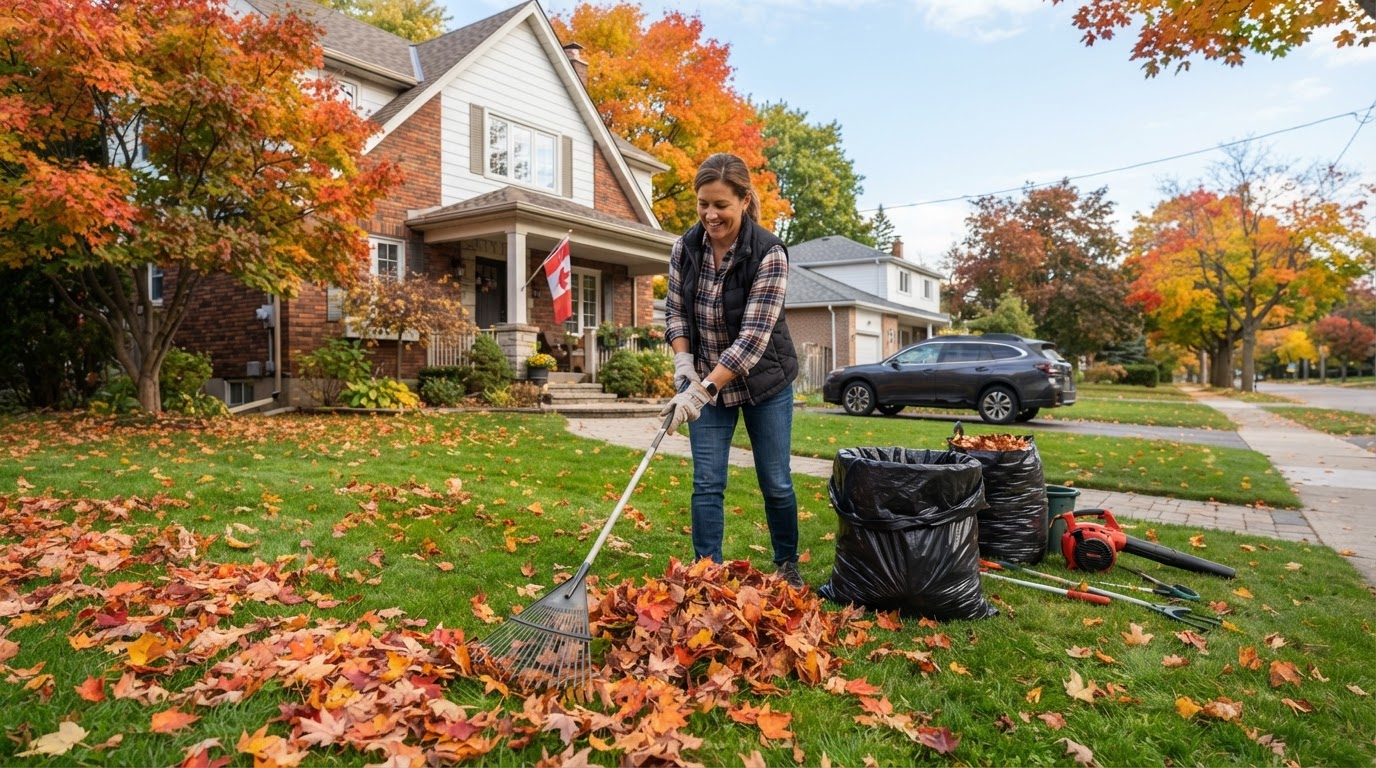
A mat of wet leaves left on the lawn through winter is one of the most damaging things you can do to your grass. Leaves block sunlight, trap moisture, and create the dark, damp conditions that foster snow mold and other fungal diseases, while smothering the grass beneath. By spring, the covered areas are often dead and patchy. Remove leaves regularly through the fall — don't wait until every leaf has dropped, because a thick early layer can already do damage. Mulch light leaf cover back into the lawn with a mower (grasscycling), but bag or compost heavy accumulations. Read more about why this matters in our guide on how fall leaf removal prevents lawn disease. For most homeowners, our fall cleanup service handles leaf removal, bed clearing, and final mowing in one efficient visit.
2. Aerate to Relieve Compaction
Fall is the ideal time for core aeration. After a summer of foot traffic, heat, and drought, the soil is compacted, and the grass is heading into a stressful winter. Aeration pulls small plugs of soil from the lawn, relieving compaction and creating channels for air, water, and nutrients to reach the root zone just when the grass is actively growing new roots. Fall aeration is especially valuable on York Region's heavy clay soils, which compact easily. It also sets up the next step — overseeding — because the holes create perfect seed-to-soil contact. Learn more on our aeration services page.
3. Overseed Thin and Bare Areas
Fall's cool, moist conditions are perfect for grass seed germination, making it the best time of year to overseed. Spread seed over thin and bare areas right after aeration, so the new grass establishes before winter and comes in thick the following spring. Dense, healthy turf is the best natural weed control, so filling in bare spots now prevents weeds from colonizing them next year. Use a high-quality blend suited to Ontario's climate — typically Kentucky bluegrass, perennial ryegrass, and fine fescue. Our overseeding services pair seed selection with aeration for the best establishment rates.
4. Apply Winterizer Fertilizer
The fall fertilizer application — the winterizer — is the most important feeding of the entire year. A winterizer high in potassium and phosphorus helps the grass build deep roots and store energy reserves for winter, so it survives the cold and greens up fast in spring. Apply it in late fall when the grass has stopped growing tall but the roots are still active, typically late October to mid-November in York Region. Skipping the winterizer is the single most common reason lawns emerge thin and weak in spring. For the full details on products and timing, read our winterizer fertilizer application guide.
5. Keep Mowing Until Growth Stops
Don't stop mowing just because the leaves are falling. Keep mowing at your normal height until the grass stops growing — usually when daytime temperatures consistently stay below 10°C. For the final cut of the season, drop the height slightly to about 2.5 inches so the grass goes into winter short and tidy; long grass left over winter can mat down and encourage snow mold. Keep blades sharp, and never remove more than one-third of the blade height in a single cut. Our grass cutting services continue through the fall to keep every lawn at the right height right up to dormancy.
6. Control Weeds While They're Vulnerable
Fall is the most effective time to control perennial weeds like dandelions and clover. In fall, these weeds pull nutrients down into their roots for winter storage, so a herbicide applied now travels with those nutrients to the root and kills the entire plant — not just the leaves. A well-timed fall weed treatment can eliminate dandelions for the following season far more effectively than a spring treatment, which only kills the top growth. This is a key step in a complete fertilization program and one that pays dividends all the next year.
7. Clean Up Beds and Edges
Fall cleanup isn't just about the lawn — your garden beds need attention too. Cut back perennials that die back, remove annuals, clear debris that harbors pests and disease over winter, and refresh mulch to protect plant roots from freeze-thaw cycles. Re-cut bed edges so they're crisp going into winter, which makes spring maintenance easier. A thorough fall bed cleanup prevents disease, protects plants, and gives you a clean slate in spring. Our fall cleanup service covers the lawn and the beds in one comprehensive visit.
The Complete Fall Lawn Care Checklist
- Remove leaves regularlyDon't let a mat of wet leaves smother the grass and foster snow mold.
- AerateRelieve summer compaction so roots grow deep before winter.
- Overseed thin areasFill bare spots while cool, moist fall conditions favor germination.
- Apply winterizer fertilizerFeed roots and build energy reserves for winter survival and spring green-up.
- Keep mowing until growth stopsFinal cut slightly shorter to prevent matting and snow mold.
- Treat perennial weedsFall herbicide travels to the root for complete, lasting control.
- Clean up beds and edgesRemove debris, protect plants, and set a clean slate for spring.
Let Us Handle Your Fall Lawn Care
Fall lawn care is a lot to coordinate, and the timing of each step matters. Get it right and your lawn emerges from winter thick, green, and ready to thrive; miss the window and you spend spring repairing damage. Our team handles the entire fall checklist — leaf removal, aeration, overseeding, winterizer fertilizer, final mowing, weed control, and bed cleanup — for homeowners across Richmond Hill, Aurora, and York Region. It all fits into our seasonal maintenance and fertilization programs, so nothing falls through the cracks. Request a free estimate and let's get your lawn winter-ready the right way.