
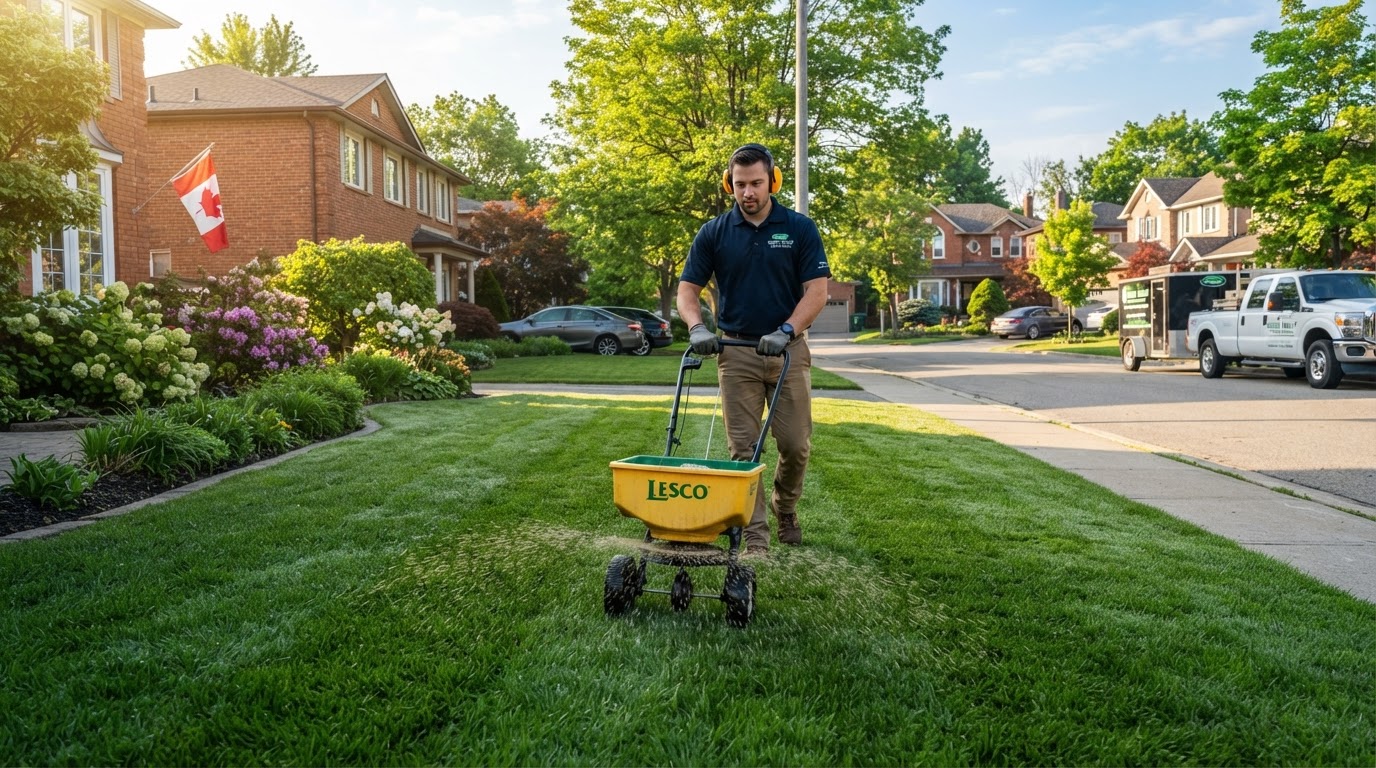
A thick, green, healthy lawn doesn't happen by accident — it's the result of a deliberate, season-by-season feeding program that gives your grass exactly what it needs, exactly when it needs it. In Richmond Hill, Aurora, Markham, and across York Region, clay-heavy soils and cold winters make a structured fertilization schedule essential. Random applications of bagged fertilizer from the hardware store simply can't match the results of a professionally timed, multi-step program. That's why our 9-step fertilization program is the backbone of every healthy lawn we maintain. This guide walks you through each of the nine steps, explains why timing and nutrient balance matter, and shows how the program works together to build deep roots, dense turf, and natural weed resistance. Whether you're a DIY homeowner or prefer to let the professionals handle it, understanding the full process helps you get the most out of every dollar you invest in your lawn.
Why a Structured Fertilization Program Matters
Grass is a living plant with changing nutritional needs throughout the year. In early spring, it needs nitrogen to wake up and green out. In summer, it needs potassium and stress-protection to survive heat and drought. In fall, it needs phosphorus and potassium to build deep roots and store energy for winter. A single fertilizer application can't cover all these needs — applying the wrong nutrient at the wrong time can actually harm your lawn, burning the roots or encouraging disease. A nine-step program sequences the right nutrients, weed controls, and cultural practices across the entire growing season so each treatment builds on the last, resulting in a lawn that gets stronger every month instead of spiking and crashing.
York Region's clay soils also hold nutrients differently than sandy soils, meaning application rates and timing must be calibrated to local conditions. Our program is built specifically for Ontario cool-season grasses — Kentucky bluegrass, perennial ryegrass, and fine fescue — and the Richmond Hill climate, so every step is optimized for the lawns we actually treat.
Step 1: Soil Testing
Every great lawn starts below the surface. Step one is a soil test that measures pH and key nutrient levels — nitrogen, phosphorus, potassium, and micronutrients. Without this baseline, fertilization is just guessing, and over-application can runoff into storm drains or burn your grass. The soil test tells us exactly what your lawn is missing and what it already has plenty of, so every subsequent application is precise and efficient. For most York Region lawns, we're looking for a pH between 6.0 and 7.0 and balanced N-P-K levels. If the test reveals deficiencies, we adjust the program accordingly rather than applying a one-size-fits-all formula.
Step 2: Pre-Emergent Weed Control
Pre-emergent herbicide is applied in early spring before soil temperatures consistently reach 13°C, creating a barrier in the soil that prevents crabgrass and other annual weed seeds from germinating. This is the single most effective way to stop weeds before they ever appear, and it sets the stage for a clean, weed-free lawn all season. For weeds that already exist or emerge in hard-to-reach areas like paver joints and sidewalk cracks, our cracks and crevice program provides targeted post-emergent control without harming surrounding turf. Getting this step right in early spring saves enormous effort later in the season.
Step 3: Spring Fertilization
Spring fertilization delivers a nitrogen-rich feeding that helps your grass break dormancy, green up quickly, and build the early-season density that crowds out weeds. The goal is steady, controlled growth — not the explosive surge that comes from cheap fast-release fertilizers, which leads to weak, disease-prone grass. We use slow-release formulations that feed your lawn gradually over several weeks, promoting strong root development alongside top growth. This step establishes the healthy, dense turf base that the rest of the program builds on.
Step 4: Aeration
Core aeration is one of the highest-impact steps in the entire program, especially on York Region's compacted clay soils. A machine pulls small plugs of soil from the lawn, relieving compaction and creating channels for air, water, and nutrients to reach the root zone. This step dramatically improves root depth, drought tolerance, and nutrient uptake. We typically pair aeration with the next step — overseeding — because the holes create perfect seed-to-soil contact for germination. Learn more about the method on our dedicated aeration services page.
Step 5: Overseeding
Overseeding introduces new grass seed into your existing lawn to fill thin and bare areas, increase turf density, and introduce improved, disease-resistant grass varieties. Dense turf is the best natural weed control, so overseeding directly reinforces the weed-prevention goals of step two. Done immediately after aeration, the seed settles into the cores and germinates at a much higher rate. Our overseeding services use blends selected for Ontario's climate and your specific lawn conditions.
Step 6: Summer Weed Control
By mid-summer, any weeds that slipped through the pre-emergent barrier become visible. Step six is a targeted post-emergent weed control application that knocks out broadleaf weeds like dandelions, clover, and plantain without damaging your grass. Summer is also when heat and drought stress the lawn, so this step is paired with careful watering guidance to keep the turf resilient. Addressing weeds now prevents them from going to seed and spreading, which would multiply the problem next year.
Step 7: Disease & Pest Control
Humid York Region summers create ideal conditions for fungal lawn diseases like dollar spot, snow mold, and brown patch, while grubs and other pests can destroy root systems. Step seven monitors for and treats these threats before they cause widespread damage. Our lawn disease control program identifies the specific pathogen and applies the appropriate fungicide, while grub control protects roots from destruction. Catching these issues early is far more effective and affordable than repairing a damaged lawn.
Step 8: Fall Fertilization (Winterizer)
Fall is the most important feeding of the entire year. A winterizer fertilizer high in potassium and phosphorus helps your grass build deep roots and store energy reserves for the long Ontario winter. This step is what determines how quickly and strongly your lawn greens up the following spring. Lawns that skip the winterizer step enter winter weak and emerge thin and patchy, while properly winterized lawns come back dense and vibrant. Read more about the timing and products in our winterizer fertilizer guide.
Step 9: Fall Cleanup
The final step removes leaves and debris that would otherwise smother the grass over winter, creating dead patches and fostering snow mold. A thorough fall cleanup ensures your winterized lawn goes into the cold months clean and breathing. Combined with the winterizer feeding, this step protects your investment and sets up a strong spring start. Removing leaves also eliminates hiding spots for pests and prevents the mat of wet leaves that causes grass rot and disease — read more in our article on why fall leaf removal prevents lawn disease.
The Cumulative Effect of All Nine Steps
No single step in the nine-step program produces a great lawn on its own — the power is in the cumulative, season-long effect. Each step builds on the previous one: soil testing informs precise feeding, pre-emergent weed control keeps the lawn clean, spring fertilization builds density, aeration relieves compaction, overseeding thickens turf, summer weed and disease control protect the gains, and the fall winterizer and cleanup lock in health for the following year. Homeowners who commit to the full program see their lawns improve dramatically year over year, with thicker turf, deeper roots, fewer weeds, and better drought tolerance. Skipping steps — especially aeration, the winterizer, or pre-emergent control — creates gaps that weeds and disease fill by the following season.
DIY vs. Professional Fertilization
Many homeowners try to fertilize their own lawns, but the reality is that professional programs deliver consistently better results for a few key reasons. Professionals calibrate equipment precisely, use commercial-grade slow-release products, time applications to local soil temperatures and weather forecasts, and combine fertilization with weed, disease, and pest control in a single coordinated program. For most Richmond Hill and Aurora homeowners, the cost of a professional program is comparable to buying retail products and renting equipment — but with dramatically better results. Learn more about the professional approach in our article on expert lawn fertilization services in Richmond Hill.
Ready for a Lush, Healthy Lawn?
The nine-step fertilization process is the most reliable path to the thick, green, weed-free lawn you want. Each step is timed to your lawn's seasonal needs and York Region's climate, so your grass gets exactly what it needs, exactly when it needs it. If you're ready to stop guessing and start seeing real results, our team handles every step of the program for you — from soil testing to winterizer. Explore our full fertilization services or request a free estimate today, and let's build a lawn you'll be proud of all year long.