Why Spring Cleanup Is the Most Important Hour You Spend All Year
In York Region, your lawn and garden take a beating every winter. Five months of snow cover, freeze-thaw cycles, road salt, and windblown debris leave damage that — if ignored — compounds through the entire growing season. Snow mold, salt burn, matted grass, compacted soil, and broken branches don't fix themselves. A proper spring cleanup is the single highest-leverage hour you'll spend on your yard all year, because it sets the baseline for everything that follows: a healthy lawn, clean beds, and plants that emerge from dormancy ready to grow instead of fighting to recover. At Lush Lawncare & Landscaping, our spring cleanup service is the first step in most of our maintenance programs, and it pairs with our 9-step fertilization program to build a lawn that stays thick and weed-free all season.
When to Start Your Spring Cleanup in York Region
Timing matters. Start too early and you compact wet soil and damage tender new growth. Start too late and you've already lost the early-spring weed and fertilization windows. Here's the timing for York Region.
Spring cleanup timing — York Region municipalities
| Municipality | Snow Clear By | Ground Firms Up | Start Cleanup | Finish By |
|---|---|---|---|---|
| Richmond Hill | Late March | Mid–late April | April 5–15 | May 10 |
| Aurora | Late March | Late April | April 10–20 | May 15 |
| Markham | Late March | Mid April | April 5–15 | May 10 |
| Vaughan | Mid–late March | Mid April | April 1–10 | May 5 |
| Newmarket | Early April | Late April | April 15–25 | May 20 |
| Stouffville | Early April | Late April | April 15–25 | May 20 |
The Full Spring Cleanup Checklist
Here's every task a complete spring cleanup should cover, in the order to do them. Do them in this sequence — skipping ahead causes rework.
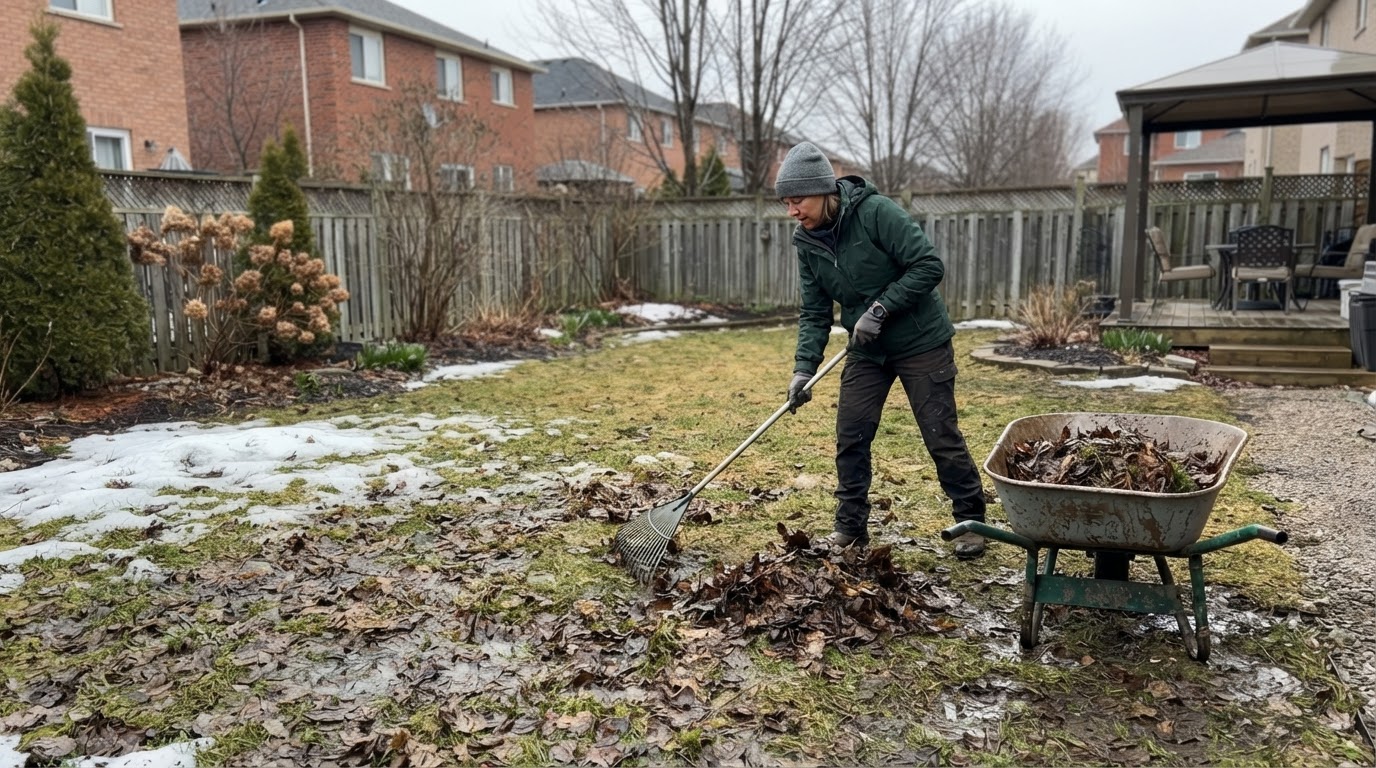
- 1. Clear debris:Rake leaves, twigs, and winter debris off the lawn and beds. Remove any leftover fall leaves that matted under the snow.
- 2. Rake snow mold:York Region's wet winters cause pink/grey snow mold — matted, crusty patches of grass. Lightly rake to break up the mat and let air in. Most recovers on its own once exposed.
- 3. Address salt damage:Road salt along driveways and walkways burns grass and soil. Flush heavily with water (2–3 deep soakings) to leach sodium. Overseed any dead edges. See our de-icing guide for prevention.
- 4. Dethatch if needed:If thatch exceeds 1/2 inch, dethatch to let air, water, and nutrients reach the soil. Not every lawn needs this every year — check first. See our dethatching guide.
- 5. Core aerate:If your soil is compacted (the screwdriver test), aerate in late April or May. Opens the soil for the season's fertilization and overseeding. See our aeration services.
- 6. Overseed bare/thin patches:Seed any bare or thin spots with a drought-tolerant blend. Spring overseeding works if you can water through the summer. See our overseeding services.
- 7. Apply pre-emergent:Crabgrass pre-emergent goes down when soil hits 13°C — typically mid-to-late April in York Region. Don't aerate after applying or you'll break the barrier.
- 8. First fertilization:Apply the first step of your fertilization program once the grass is actively growing. We use a nitrogen-rich spring feed to kick-start green-up. See our 9-step program.
- 9. Edge beds and walkways:Re-cut clean edges between lawn and beds. This is what makes the yard look professional — the line is everything.
- 10. Refresh mulch:Top up mulch to 2–3 inches in all beds. Black or dark hardwood for the cleanest look. See our mulch guide for product selection.
- 11. Prune dead/damaged wood:Remove winter-killed branches from shrubs and trees. Hold off on spring-bloomers (forsythia, lilac) until after they flower to avoid cutting buds. See our pruning services.
- 12. Clean hardscape:Sweep and pressure-wash interlocking, patios, and walkways. Check for settled or heaved pavers from frost. See our interlocking services for repairs.
What Winter Does to a York Region Lawn (and What to Fix)
Understanding winter damage helps you prioritize. Here are the four most common winter problems we see across Richmond Hill and Aurora every spring.
- Snow mold:Fungal disease from snow cover on unfrozen, wet grass. Pink or grey matted patches. Rake to break the mat, let air in, overseed if it's truly dead. Mostly cosmetic.
- Salt burn:Sodium chloride from road salt and driveway de-icers kills grass along edges. Flush with water, overseed, and use calcium chloride or sand next winter. See our de-icing guide.
- Vole/mouse damage:Runways under the snow where rodents tunneled. Usually recovers with raking and fertilization; overseed if the trails are bare.
- Frost heave:Freeze-thaw lifts pavers, plants, and edging. Re-set any heaved pavers before the ground settles fully in May. Press heaved perennials back into the soil.
Spring Cleanup Cost: DIY vs Professional
Here's what a spring cleanup costs in York Region, broken out by approach.
Spring cleanup cost comparison — York Region 2026
| Approach | What's Included | Cost | Time |
|---|---|---|---|
| DIY (basic) | Rake, edge, mulch, first feed | $150–$250 in materials | 1 day (6–8 hrs) |
| DIY (full) | Above + dethatch + overseed + pre-emergent | $250–$400 in materials | 1–2 days |
| Professional (basic) | Debris, raking, edging, mulch, cleanup | $200–$350 | Half day |
| Professional (full) | Above + aeration + overseed + first fertilizer step | $350–$600 | Full day |
| Full program bundle | Spring cleanup + season-long 9-step fertilization + weekly mowing | $1,800–$3,200/season | Hands-off all year |
Common Spring Cleanup Mistakes to Avoid
These are the mistakes we see every year that undo the cleanup or damage the lawn.
- Raking while the soil is wet:Compacts the soil and rips up tender roots. Wait until the ground firms up — usually mid-April in Richmond Hill.
- Mowing too short in spring:The first mow should be high (3.5–4 inches). Cutting short stresses the grass right as it's trying to recover from winter.
- Applying pre-emergent too early:Needs soil at 13°C. Apply too early and spring rain washes it out before crabgrass germinates. Aim for mid-to-late April in York Region.
- Skipping the soil test:If you've never tested, do it this spring. York Region clay often needs lime to raise pH. A $30 test saves a season of guessing.
- Not cleaning up the hardscape:Pressure-washing pavers and resetting heaved stones in spring prevents bigger repairs later. See our interlocking maintenance tips.
Frequently Asked Questions
The spring cleanup questions we hear most from York Region homeowners.
- When should I book a spring cleanup in Richmond Hill?Book in February or early March for an April slot. We start cleanups the first week of April once the ground firms up. Last cleanups run through mid-May.
- Do I need aeration every spring?Not necessarily every spring — if your lawn is healthy and soil isn't compacted, fall aeration may be enough. If you have clay soil or heavy traffic, spring aeration helps. See our aeration calendar.
- Can I do spring cleanup myself?Absolutely. The basic cleanup (rake, edge, mulch, first feed) is DIY-friendly. The value of hiring a pro is the aeration, overseeding, and knowing exactly what to apply and when.
- How soon after cleanup can I mow?Wait until the grass is actively growing — usually 7–10 days after your first fertilization. Mow high (3.5–4 inches) and never cut more than one-third of the blade. See our grass cutting services.