If you care about having a thick, green lawn in Richmond Hill, you've probably heard people talk about liquid aeration and core aeration. Both aeration methods promise healthier grass, stronger roots, and better-looking yards — but they work in very different ways, and choosing the right one for your property can mean the difference between a lawn that thrives and one that stays stuck. York Region's heavy clay soils compact easily under foot traffic, freeze-thaw cycles, and wet springs, making aeration one of the single most impactful lawn care services you can invest in. In this guide, we'll walk through the pros and cons of each method, who each is best for, and which approach is generally preferred for Richmond Hill and Aurora lawns. We'll also cover what to do after aeration to maximize results, how aeration fits into a complete fertilization program, and how to decide based on your lawn's specific condition. Whether you're dealing with hard, compacted soil or just want to thicken a thin lawn, understanding these two methods will help you make the right call.
Why Aeration Matters for Richmond Hill Lawns
Richmond Hill's climate and soil create the perfect conditions for soil compaction. Heavy clay-based soils in many neighbourhoods become dense and hard, busy families with kids and pets constantly walk and play on the grass, and freeze-thaw cycles along with wet springs pack the soil down over time. When soil gets compacted, water and nutrients struggle to reach the roots, grass roots stay shallow, the lawn dries out faster in summer, and weeds find it easier to move in. That's why regular aeration is one of the most important lawn care tips for Richmond Hill homeowners who want healthy turf without constantly fighting bare patches and brown spots.
The signs of compaction are easy to spot: water puddles on your lawn instead of soaking in, the soil feels hard like a driveway when you walk on it, and grass thins out in high-traffic areas. If you struggle to push a screwdriver into the soil, your lawn is compacted and would benefit significantly from aeration. Both liquid and core aeration address this problem, but the right choice depends on how severe the compaction is and what else you're trying to accomplish — like overseeding to thicken the turf.
What Is Core Aeration?
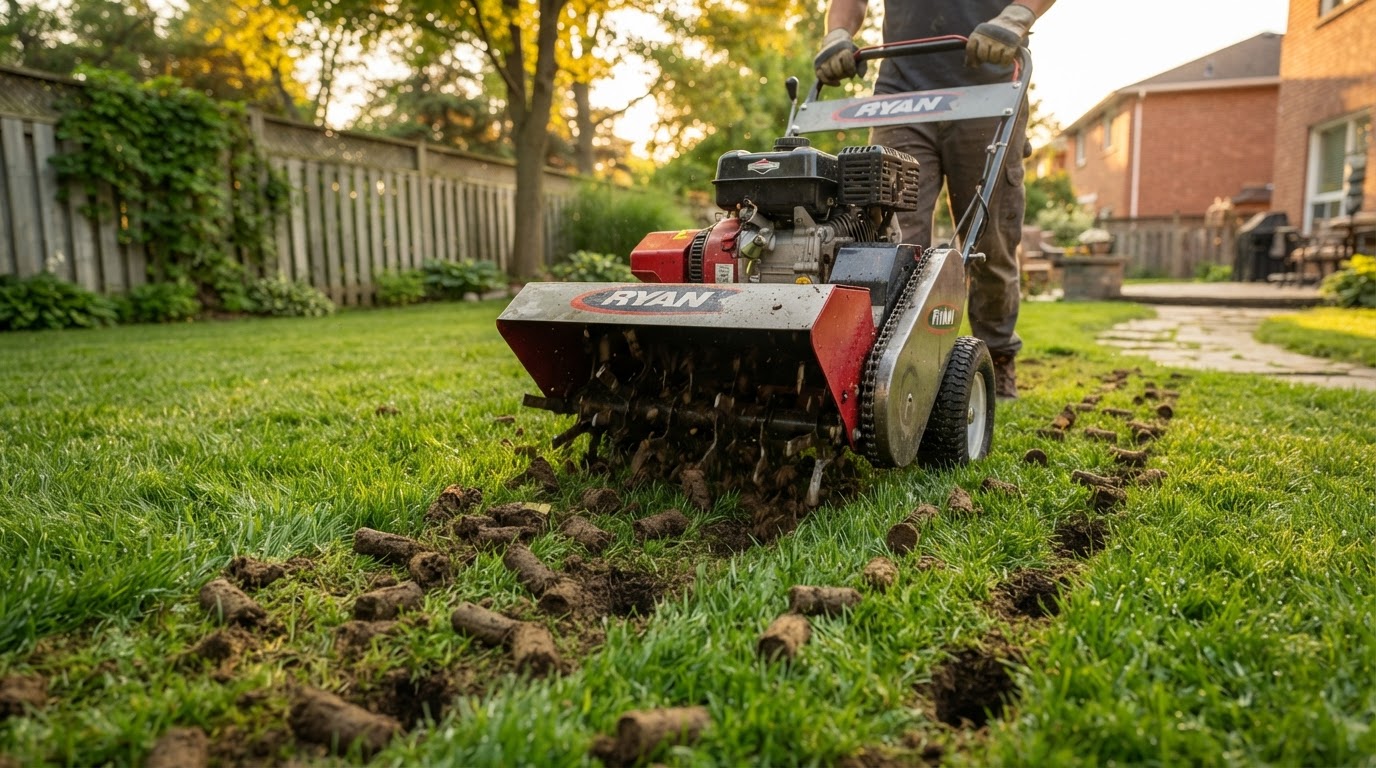
Core aeration — also called mechanical or plug aeration — is the traditional method most people think of. A machine with hollow tines rolls across your lawn, pulling out small plugs of soil and thatch and dropping them on the surface. Those little soil plugs you see scattered all over the yard in spring or fall are the visible sign of core aeration at work. The holes left behind create direct channels for air, water, and nutrients to reach the root zone, and the plugs break down naturally over a week or two, returning organic matter to the surface.
Pros of Core Aeration
Physically relieves compaction: By removing actual chunks of soil, core aeration opens direct pathways for air, water, and nutrients to reach the root zone. This is especially helpful for the dense clay soils common in Richmond Hill lawns.
Great for overseeding: The holes left behind create perfect little seed pockets when you overseed. New grass seed falls into the holes, staying moist and protected while it germinates. For anyone trying to thicken up a thin lawn, this is a huge advantage and why we almost always pair core aeration with our overseeding services.
Long-lasting impact: Because it changes the physical structure of the soil, the benefits of core aeration can last a full season or more, especially when combined with good fertilizing and watering habits.
Helps thatch break down: The removed plugs and the holes they leave behind encourage soil microbes to break down thatch faster, helping reduce that spongy layer that can suffocate roots. If your thatch layer is over a half inch thick, core aeration combined with de-thatching is the recommended remedy.
Cons of Core Aeration
Messy appearance (temporarily): For a week or two, your lawn will look like it's covered in little mud pellets. They do break down naturally, but some homeowners don't love the look, especially in front yards or right before a backyard gathering.
Physically demanding if DIY: Renting and pushing a core aerator is real work, especially on sloped or uneven Richmond Hill properties. Many people prefer to hire a professional to avoid sore backs and potential damage to sprinklers or shallow utility lines.
Can miss tight corners: Larger machines can't always get into small side yards, narrow strips, or around intricate landscaping, leaving some areas untreated if you're not careful.
Timing matters: Core aeration is best done in early fall or late spring when grass is actively growing. Done at the wrong time, it can stress the lawn rather than help it.
What Is Liquid Aeration?
Liquid aeration is a newer approach that has become popular as lawn care products have evolved. Instead of pulling plugs, a liquid solution is sprayed over the lawn. This solution usually contains ingredients like humic acid, surfactants, and other soil conditioners designed to loosen soil structure and improve how water moves through the ground over time. Think of it as gently relaxing the soil instead of punching holes in it. There's no visible mess and no disruption to the turf surface, which makes it appealing for lawns that need to stay looking pristine.
Pros of Liquid Aeration
No mess, no plugs: Because there are no cores pulled, your lawn looks neat immediately after treatment. There's no need to wait weeks for plugs to break down before your yard looks photo-ready again.
Even coverage: A liquid can be sprayed into tight corners, narrow strips, and around landscaping where a machine might struggle. This is handy for many Richmond Hill properties with interesting shapes and mature gardens.
Gentle on irrigation and utilities: There's no risk of tearing up sprinkler heads, invisible dog fences, or shallow cables because nothing is physically digging into the soil.
Can be part of a broader treatment: Many liquid aeration products also include micronutrients or organic matter that support overall soil health, giving you a multi-benefit treatment in one pass.
Cons of Liquid Aeration
Less immediate impact on severe compaction: Liquid aeration works more gradually by improving soil structure. For heavily compacted clay, it may take multiple applications and patience before you see the same level of improvement that core aeration can deliver in a single visit.
Not ideal alone for thick thatch: If your lawn has a heavy thatch layer, liquid aeration won't physically cut through it the way core aeration can. You might still need mechanical help if thatch is a big problem.
Harder to see the work: With core aeration you can see the holes and plugs, which reassures many homeowners that something real happened. With liquid aeration, the results are more subtle and show up over time, which requires a bit more trust in the process.
Quality varies: Not all liquid aeration products are created equal. Some are excellent, others are basically glorified fertilizers. It's important to work with a reputable provider who uses proven formulations.
Liquid vs Core Aeration: Side-by-Side Comparison
| Feature | Core Aeration | Liquid Aeration |
|---|---|---|
| How it works | Removes soil plugs to create physical holes | Sprayed solution loosens soil structure over time |
| Best for | Heavily compacted, clay-rich lawns and overseeding | Mild to moderate compaction, ongoing soil health |
| Appearance after | Visible plugs on the surface for 1–2 weeks | Lawn looks normal right away |
| Risk to irrigation | Higher if heads or cables are shallow | Very low, no digging into soil |
| Speed of results | Immediate physical relief | Gradual improvement over weeks |
| Thatch reduction | Yes, cuts through thatch | Limited, won't cut thick thatch |
Which Aeration Method Is Preferred in Richmond Hill?
For most Richmond Hill lawns, core aeration is still considered the gold standard, especially if your soil is noticeably hard and compacted, you have a lot of foot traffic from kids and pets, or you're planning to overseed to thicken the turf. The physical removal of soil creates immediate channels for air and water, which is incredibly valuable in our clay-heavy areas. When combined with overseeding and proper fertilization, core aeration can transform a tired lawn in a single season.
That said, liquid aeration is quickly becoming a preferred choice for homeowners who want a gentler, cleaner approach and are willing to think long-term about soil health. Many professional lawn programs in Richmond Hill now use a combination: core aeration every year or two, supported by periodic liquid aeration to keep improving the soil between mechanical treatments. This hybrid approach delivers both immediate relief and ongoing soil improvement.
Key Takeaway: If your lawn is in rough shape, start with core aeration. Once it's healthier, liquid aeration can help maintain and gently enhance your progress. When you're ready to schedule a visit or ask questions about your specific yard, our team at Lush Lawncare can help you choose the right approach.
Who Is Core Aeration Best For?
Core aeration is an excellent fit if you have a visibly compacted lawn — if you struggle to push a screwdriver into the soil, or your lawn feels like concrete in late summer, core aeration can give you the deep relief you need. It's also ideal for homeowners who want thicker turf and are planning to overseed, since the holes protect new seed and keep it moist. If you can tolerate a temporary ugly phase with plugs on the lawn for a short time, you'll be rewarded with stronger, deeper roots later in the season. For lawns that have been neglected or are recovering from construction, core aeration is like hitting the reset button on soil structure.
Who Is Liquid Aeration Best For?
Liquid aeration is a great choice if you want a neat, tidy lawn year-round and don't want to see plugs or holes — it keeps everything visually clean while still improving soil conditions. It suits lawns with mild to moderate compaction where the soil isn't rock-hard but could use some loosening over time without the disruption of machines. Yards with complex landscaping, in-ground lighting, or sensitive irrigation systems benefit from a spray-based approach that doesn't risk damage. If you see lawn care as an ongoing investment rather than a quick fix, liquid aeration fits nicely into a yearly program aimed at building healthier soil season after season.
Practical Lawn Care Tips After Aeration
No matter which aeration method you choose, what you do afterward plays a big role in your results. After aeration, your lawn can absorb water and nutrients more efficiently, so aim for deep, infrequent watering rather than quick daily sprinkles — this encourages roots to grow deeper, making your grass more drought-tolerant in summer. Aeration also opens pathways for nutrients, making it the perfect time to apply a quality fertilizer suited to our local climate. If you've done core aeration, spread grass seed over bare or patchy spots right away; the holes help protect the seed and keep it moist, giving you thicker, more uniform turf over time.
Be patient — aeration is a foundational step, not a magic overnight cure. Give your lawn several weeks to respond, and you'll start to notice deeper color, better density, and improved resilience. Great lawns are built with consistent care, not one-time miracles. Aeration — whether liquid or core — is one of those quiet, behind-the-scenes steps that pays off beautifully over the long run, especially when it's part of a complete fertilization and maintenance program.
Choosing the Right Aeration Plan for Your Richmond Hill Lawn
If you're still unsure which approach to choose, here's a simple way to think about it. If your lawn is struggling — thin, compacted, and full of bare spots — start with core aeration, overseed, and follow up with proper watering and fertilizing. Once it improves, add liquid aeration to keep building soil health. If your lawn looks decent but could be better — no major bare patches but the grass seems tired — a combination of liquid aeration and a light overseeding can gently boost performance without a big visual disruption. If your lawn is already your pride and joy, regular liquid aeration treatments combined with occasional core aeration will help you maintain that lush, golf-course look.
Remember, the best aeration method is the one that fits your lawn's current condition, your expectations, and how much disruption you're comfortable with. There's no one-size-fits-all answer, but there is a solution that's right for you and your yard. If you'd like expert help planning or performing your next aeration, our team provides both methods and can recommend the right one based on a free on-site assessment.
Final Thoughts: Liquid vs Core Aeration
When it comes to liquid vs core aeration in Richmond Hill, both have an important place in a smart lawn care plan. Core aeration shines when you need strong, immediate relief from compaction and want to overseed effectively. Liquid aeration stands out for its clean appearance, gentle approach, and ability to support long-term soil improvement across the entire lawn, including tricky areas where machines can't go. If you take only one idea away, let it be this: aeration of any kind is one of the best lawn care tips you can follow for greener, thicker Richmond Hill lawns. Whether you choose plugs, liquid, or a mix of both, you're giving your grass the breathing room it needs to thrive. To get started with professional aeration tailored to your property, explore our aeration services and request a free estimate today.