Let's tell it straight: not all mulch is created equal. If you're grabbing whatever bags are on sale at the local big-box store, you might be doing your yard more harm than good. Cheap mulch is often made from recycled pallet wood treated with chemicals, and it loses its color before the summer even hits its peak. For homeowners in Richmond Hill, Aurora, Newmarket, Markham, and across York Region, dealing with our specific climate — heavy spring rains, humid summers, and freezing winters — means your landscaping needs the right materials to survive and thrive. Whether you are looking to suppress weeds, retain moisture, or just boost your home's curb appeal, this guide covers how to choose and apply the best mulch for your landscaping. As a full-service landscaping company in York Region, we've installed thousands of yards of mulch across the GTA and know exactly which products perform best in our climate.
Why Mulch Matters for York Region Properties
Mulch is far more than decoration — it's the protective layer your soil desperately needs. A proper mulch application suppresses weeds by blocking sunlight from reaching weed seeds, retains soil moisture by reducing evaporation during hot Ontario summers, regulates soil temperature to protect roots from freeze-thaw cycles, and improves soil structure as organic mulches decompose. For properties in Richmond Hill and Aurora, where heavy clay soils are common, the right mulch can dramatically improve growing conditions. Mulch also gives garden beds a clean, finished look that instantly elevates curb appeal — a key factor in property value across York Region. Skipping mulch, or using the wrong type, leaves your beds vulnerable to weeds, drought stress, and erosion, undoing the investment you've made in plants and design.
1. Choosing the Best Mulch for Your Yard
When it comes to professional property maintenance, choosing the right mulch starts with understanding the available options. Here is a breakdown of the top mulch choices for York Region homeowners and where each works best.
Hardwood Bark Mulch (Natural & Dyed)
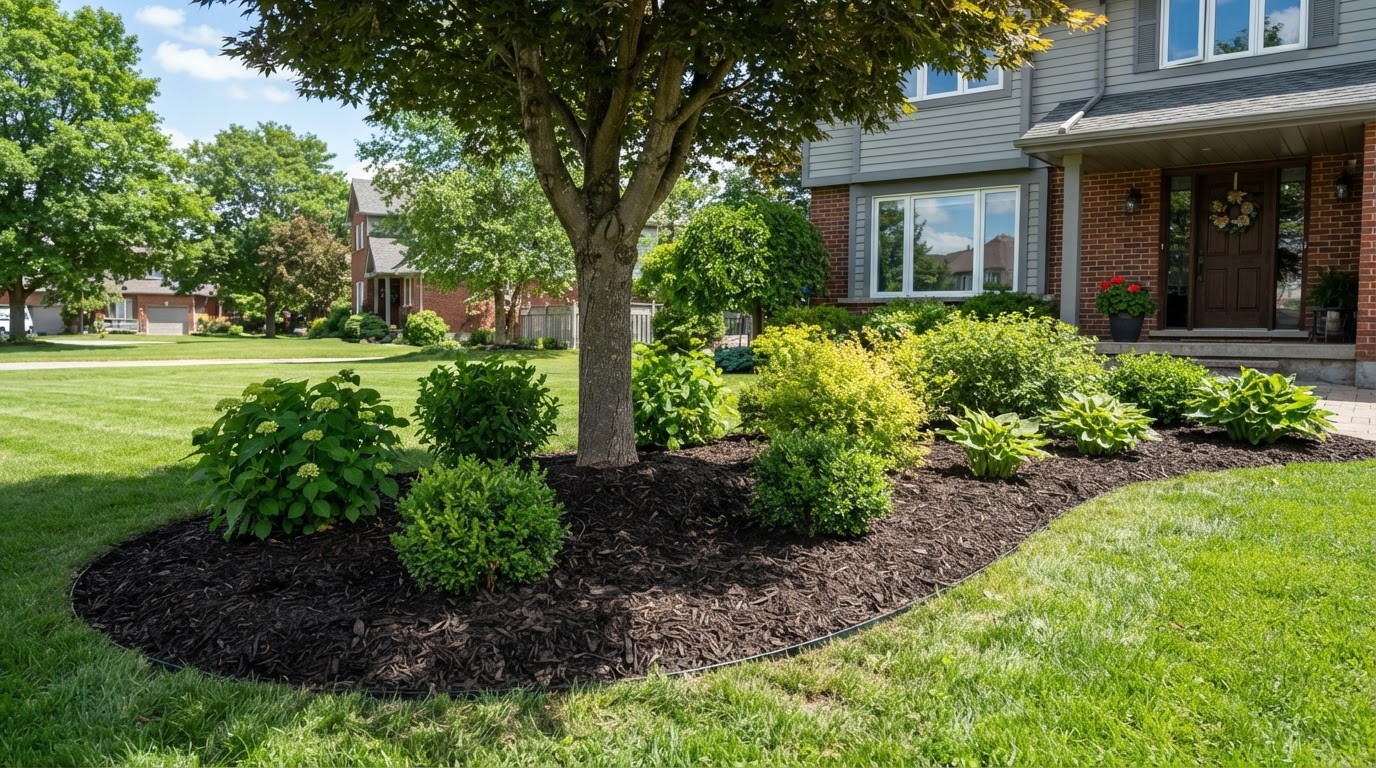
The Pros: This is the most popular choice for a reason. It suppresses weeds effectively, traps moisture during hot Ontario summers, and breaks down quickly to feed the soil. High-quality dyed hardwood (brown or black) uses natural, non-toxic dyes that create a striking contrast against green lawns. Black mulch in particular has become a premium choice for modern Richmond Hill landscapes because it makes green foliage pop. The Cons: It requires topping up every year or two as it decomposes. The Verdict: The best all-rounder for general garden beds and tree bases. Where to Buy: For bagged options, products like Scotts Nature Scapes Colour Enhanced Mulch are solid choices for DIYers, but for consistent quality and uniform depth, bulk delivery from a professional landscaper is far superior.
Pine & Cedar Bark
The Pros: Cedar and pine break down much slower than standard hardwood, meaning you don't have to replenish them as often. They also have natural oils that act as a fantastic pest deterrent, making them ideal near outdoor living spaces. The Cons: Because they break down slowly, they don't add nutrients back into the soil as quickly as hardwood. The Verdict: Ideal for walk paths, large perennial beds, and low-maintenance areas where longevity matters more than soil amendment. Cedar mulch is particularly popular for properties in Markham and Vaughan that prioritize low-maintenance landscaping.
River Rock & Stone Mulch
The Pros: If you want a one-and-done solution, river rock or decomposed granite is it. It doesn't fade, decompose, or blow away in heavy storms. It's a staple in premium landscaping designs and works beautifully around modern architecture. The Cons: It's a heavy, expensive initial investment. Rocks also absorb heat, which can dry out the soil faster and damage delicate plants if you aren't careful. The Verdict: Best used around foundations, in high-drainage areas, or to highlight architectural features. Stone mulch pairs especially well with custom retaining walls for a cohesive hardscape design.
2. When Is the Best Time to Mulch in Ontario?
Timing is everything. One of the biggest mistakes homeowners make is rushing to apply mulch the second the snow melts in March. Wait for the soil to warm up. If you apply mulch while the ground is still freezing cold, you effectively trap the cold in the soil, delaying your plants' spring growth. The ideal time to apply mulch in the Greater Toronto Area is usually late April to mid-May, after you've completed your initial spring cleanup. A second lighter application in fall helps protect roots through winter. For the full seasonal schedule, read our guide on how mulching benefits transform your lawn health.
3. How to Apply Mulch the Right Way
Even the best mulch is useless if it's installed wrong. Follow these three rules to get professional results:
- Clear the Canvas:Never just dump new mulch over weeds. Pull the weeds by the roots and edge your garden beds cleanly so the mulch doesn't spill onto the grass. Clean bed edges make the entire property look more polished.
- The 2-to-3 Inch Rule:Spread the mulch 2 to 3 inches thick. Any less, and weeds will push right through. Any more, and you risk suffocating your plants' roots and inviting fungal diseases. Consistency in depth is what separates a professional install from a DIY job.
- Avoid the Volcano:Take a drive through any Richmond Hill neighborhood, and you'll see mulch volcanoes — mulch piled high against the trunks of trees. Stop doing this. It rots the tree bark and invites insects and disease. Always leave a 2 to 3-inch gap between the mulch and the base of the tree or plant stem.
4. How Mulch Fits into a Complete Landscape Plan
Mulch works best as part of a complete landscape strategy, not in isolation. Fresh mulch complements healthy lawn maintenance, frames softscaping like garden beds and plantings, and provides a clean backdrop for hardscaping features like patios and walkways. When mulch, lawn, and hardscape are maintained together, the entire property looks intentional and well-cared-for. That's why our seasonal maintenance programs include mulching alongside grass cutting, fertilization, and cleanup — so nothing is neglected and everything works together.
5. Bulk vs. Bagged: Why Professional Installation Wins
Lugging dozens of plastic bags from a hardware store in the back of your car is back-breaking work, terrible for the environment, and usually results in thin, uneven garden beds. When you order premium bulk mulch from GTA suppliers or hire a professional landscaping team, you get consistent quality, uniform depth, and heavy-duty weed prevention. More importantly, you get your weekend back. A professional mulch installation also includes proper bed preparation — weeding, edging, and cleanup — so the mulch looks great and performs well from day one. For most York Region homeowners, the time saved and quality difference make professional installation the clear choice.
Common Mulching Mistakes to Avoid
- Using dyed mulch from unknown sources:Cheap dyed mulch can contain contaminated recycled wood. Always use mulch from a reputable supplier.
- Applying too thick:More than 3 inches suffocates roots and invites disease. Depth matters more than volume.
- Mulching too early in spring:Applying over cold soil traps the cold and delays plant growth. Wait until soil warms.
- Neglecting bed prep:Mulch over weeds just hides them temporarily. Always clear and edge beds first for lasting results.
- Piling against tree trunks:Mulch volcanoes rot bark and kill trees. Keep a gap around every trunk.
Ready to Upgrade Your Curb Appeal?
At Lush Lawncare & Landscaping, we know exactly what it takes to make York Region properties stand out. Whether you need a fresh layer of premium black mulch installed through our dedicated mulching services, a complete yard redesign, or year-round property maintenance, we've got you covered. Don't spend your spring hauling dirt. Contact us today for a free estimate to get your yard summer-ready, and let our team handle the heavy lifting so you can simply enjoy the results.